Targeting teens - Writing for teens
Speech given by Tessa Duder to the North Island Children’s and Young Adult’s Librarians’ Conference, Rotorua, July 22-23, 2010
Targeting teens! Unlike most of you here, I can
remember a time when there were no teenagers to be targeted. They were not
invented until the early 1950s.
Defined as ‘adolescent’
around 13 or 14, you began to dress much the same as your parents: slacks, ties
and tweed sports jackets for boys; twin-sets, slim skirts, stockings and court
shoes for girls. You listened to the same radio shows: Take It From Here, The Goons, Hancock’s Half Hour, remember
those? You went straight from
reading the Famous Five, Just William and Biggles, to Dickens or James
Mitchener or Mary Renault and in my case, Tolstoy. I didn’t consider myself particularly
precocious to be reading War and Peace at 14 and even younger, at 13, playing Cassius in a class production of scenes
from Julius Caesar. (‘Yond’ Cassius has a lean and hungry look; He
thinks too much: such men are dangerous.’ Is this where I learned that scoundrels
are really interesting?)
But as we now
know, it was music that led the 20th century’s social revolutions.
In the early 1950s, with newly affordable vinyl LPs, came something quite
radical and very appealing to the young: ‘One o’clock, two o’clock, three
o’clock rock,’ and then in early 1960s Chubby Checker’s Twist and the unstoppable
Fab Four. By this time, the western Teenager was being well catered for: most
noticeably after pop music, clothing but also language, movies, tv programmes, magazines,
cars, shops, surf boards and later, with tragic inevitability in permissive
times, those iniquitous temptations called party pills and Alcopops. Between childhood and adulthood, for a
whole six years, there now stood another species, loudly claiming different
rights, needs, desires and motivating passions.
Fiction for
teens, also inevitable, gathered real momentum in Britain and America in the
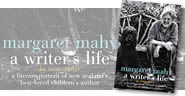
1960s. In New Zealand it was Margaret Mahy who led the way with her magnificent
quintet of novels between 1984 and 1995: The
Changeover, The Catalogue of the Universe, The Tricksters, Memory and The Other Side of Silence. My own first
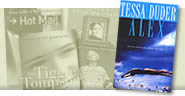
stab at a YA novel came in 1987, a story about a girl called Alex who wanted to
go to the Rome Olympics. Those days, I was barely aware of the literary theorising
going on behind YA; I just wrote my third novel with a 15-year-old, rather than
11-year-old, protagonist. Now,
having passed through various stages of being rather doctrinaire about the
genre, then confused and somewhat irritated with claim and counter-claim,
especially around awards classifications, I confess to having grown somewhat tired
of the whole debate: when is a novel YA, adult or cross-over. Does it have to be one, or the other, or
can it be all three?
Professionally, authors
have the luxury of standing back. I’ve heard many others say that first and
foremost, they write for themselves, not for any supposed market. Elizabeth
Knox once said with enviable confidence on a literary festival panel that Dreamhunter was a YA book ‘because I say
it is!’
I don’t think
it’s quite as simple as that. Authors can sincerely but blithely claim they ‘write for themselves,’
but most others in the literary food chain – publishers, booksellers,
secondary school teachers, librarians and awards judges - must consider
inescapable factors of editing (swear words or not), design, marketing and
promotion, appropriate shelving in libraries and shops, selection for English
classes and categorising for awards.
Literature for
young people, after all, is peculiar and unique, being the only genre that is
not written by one of its own readers. A very recent issue of the New Yorker, examining the current
fashion for dystopian themes in YA literature, reflects on [quote] the paranoid spirit of these novels [in] that
adults are the ones who write them, publish them, stock them in stores and
libraries, assign them in classes, and decide which ones win prizes. (Most of
the reader reviews posted online seem to be written by adults as well.)
In a speech
published in the 1999 Storylines Year Book, Kate de Goldi went further,
claiming that The real readers of the
genre are either able eleven-year-olds, or the teachers, librarians, children’s
literature aficionados, booksellers, competition judges and interested parents,
who while diligently peddling – interesting choice of word, that - peddling the books to their
intended teenage market, are, increasingly left holding the books. . . if the
Young Adult genre is more notional than actual, then publishers may have to
re-frame and re-name and finally re-position. The army of librarians, teachers,
and commentators buttressing the YA literature industry may need to refocus and
talk more honestly about who is really reading the genre.
I wonder if eleven
years on, her view, widely shared if not so eloquently articulated at the time,
has changed; probably not much, although the notion of ‘cross-over’ is now
respectable and increasing. You, as professionals, deciding what to buy, where
to shelve it, knowing what is borrowed and by whom, analysing statistics and
trends, would be far better judges of that than me.
As to whether a writer
like say, Sonya Hartnett, truly writes for a YA audience, many of you might
agree with the Australian commentator who rather wearily
concluded that eventually writers of Sonya Hartnett's standing reach a stage
where the only useful point of reference is their own work. Rather than
quibbling about whether The Ghost's Child is a work for children or adults (it's both) - and you could include here Surrender, Sleeping Dogs, Of a Boy or her latest, Butterfly - it makes more sense to
take it as the latest work from a writer of remarkable originality whose first
loyalty is to the story.
Anyway, surely it’s
no bad thing that adults choose to read YA, almost guaranteed of a lively, solid
and entertaining narrative. They are
in fact the canny, open-minded and cool ones on the block! In a good YA novel a
reader will find themes that reflect the age, experience and challenges of
adolescents, their real, everyday issues. Well, who amongst us is so
high-minded as to profess to be uninterested in our once teenaged selves? The Genre
requires that the protagonist is nearly always an adolescent, usually in some
way empowered by the arc of the story, which especially if it’s a dystopian
tale, nearly always winds up with some shred of hope. Storylines are
classically structured; narratives are plot-driven; dialogue is authentic and
lively; facts and details are accurate; and the narrative voice is memorable.
Shouldn’t most
of those characteristics feature in an adult novel? Increasingly not, it seems.
Only a week ago, a lightweight New York columnist joined the Greek chorus of
those predicting yet again the death of the novel, now become a "museum-piece genre", a creaking old
thing destined for the scrapheap, like visiting cards or hand-written address
books. Non-fiction is now the place that attracts all the good writers.
It’s bunkum, of
course; agreed, there’s some great non-fiction around and also a great many depressing,
self-referential and forgettable novels by authors boring the hell out of
audiences at literary festivals.
But let no one dismiss
as ‘a creaking old thing’ the magnificent Hillary Mantel novel Wolf Hall or Barbara Kingsolver’s The Lacuna, or any long-awaited new
offering from John Le Carre or Ian McEwen or Rohanton Mistry, from David Malouf
or Lloyd Jones or Maurice Gee or Jenny Pattrick. And anyone who thinks that
children ‘aren’t reading any more’ – don’t you hate it when people so
confidently trot out that phrase? - clearly hasn’t seen the sales figures of
the Harry Potter septet, the Dark Materials trilogy, the Twilight series and its
on-going potboilers, the Cherub series and thousands of single successes. We
can see in any bookshop, commuter train, beach and airport that the Web and
social networking have so far not stopped adults and young people buying big
demanding reads, or so-called ‘literary’ ones. And as we stand on the brink of
the e-book revolution, it’s reasonable to speculate that today’s young ‘digital
natives’ may swiftly take to reading fiction on an I-Pad as the coolest activity.
Meantime, however,
there is a serious challenge in de Goldi’s words, one reinforced by her own
award-winning novel The Ten PM Question. We can reasonably surmise from its
shortlisting for the 2009 Montana awards and regular appearance since then high
on the Booksellers NZ Best-seller list, that this book has found a strong adult
audience, the mature female one that buys books, and especially in recent
years, Jenny Pattrick and Deborah Challinor and Fiona Kidman And Emily Perkins.
Yet I’ve read in
reviews and heard said, by well-informed people I respect, that despite winning
the NZ Post Senior Fiction and Supreme Award, and with its 12-year-old
protagonist and sophisticated tone and language, The Ten PM Question is not a novel
likely to have a wide readership among early or middle teens. It would be really interesting to know
how many schools bought class sets – and I would guess, not many – and
further, how many English teachers hook into the NZ Post awards promotion each
year, encourage their classes to read the senior fiction shortlists, get
debates going, celebrate the winners.
I may be unfairly
raking over old coals here – I hope I am – but I’ve never forgotten
my shock some years ago when I mentioned Kate de Goldi to a group of thirty English
teachers. It was at a late January seminar, the last week of the holidays, beach
weather outside, so these were the eager, conscientious ones. I expected them,
I think reasonably, to know their New Zealand books. Yet when I mentioned Kate’s very fine debut novel Sanctuary, which a few months earlier had
won the NZ Post Senior Fiction award, I met with blank faces. Not one had heard of either the author
or the book or even, and this is even more staggering, the awards! Now, twelve years later, could a comparable
thing happen again? Her profile is very much higher, and NZ Post is a
high-profile annual arts event, but still, I fear it might. Over the years I’ve
heard other award-winners, names familiar to you, comment quite bitterly that,
awards and great reviews and publicity campaigns and school visits and writers’
festivals and even overseas editions and invitations to offshore festivals
notwithstanding, for all of this, their books and those of their colleagues seem
to be little known in the nation’s high school classrooms.
Now I’m not in any way
diminishing the on-going and invaluable work quietly being done with and for
teens in school and public libraries. I sit with several YA librarians on the
Storylines Trust management committee so I’m aware of their strong personal
commitment to their calling. And I’m certainly not pointing the finger at secondary
English teachers constrained by small budgets, too much paperwork, a waffly
sort of English curriculum and high expectations from parents and their
communities.
But it seems to me
that there is a major challenge here: not just how, with campaigns and author
visits and the like, to get the teens reading their own country’s YA authors,
but how to get the teachers interested, passionate and committed because they genuinely share the belief
that it is the birthright of every New Zealand child to grow up familiar with
their own country’s literature, from Greedy
Cat, to Hairy Maclary through to Alex and The Changeover and See Ya
Simon and Genesis. Just as British children are taught
their literary heritage, and American children, theirs, and Australian children
theirs; so that at the very least, I could ask any teacher in any classroom from
Kaitaia to Bluff the winner of this year’s New Zealand Post Senior Fiction
award and get the same prompt and informed answer that you as a group would
give.
Unrealistic? Too
idealistic? Too demanding of over-stretched teachers? I don’t think so, because
if we accept it’s professional development we’re talking about as the best or
indeed only way to improve the situation, then there is a successful model, and
it’s right across The Ditch.
In 1992, I was invited
as one of two New Zealand writers to the first biennial conference of the
Children’s Book Council of Australia held in Sydney. I drank wine with their rock stars like Victor Kelleher and
John Marsden, and sat in a spa with Gillian Rubenstein, later to win fame and
fortune as Liam Hearn. But the most important friendship I made during those
few days was with Agnes Nieuwenhuizen, Iranian-born of Hungarian parents,
Victorian by choice, and a passionate and forthright champion of an Australian
literature for Australian youth. At
that time, after decades of secondary teaching, she was setting up a centre for
her activities in St Martin’s in Melbourne, later to become the Centre for
Youth Literature based at the State Library of Victoria.
For nearly twenty
years I’ve been privileged to watch and share some of Agnes’s energy and
passion for youth literature. As
well as establishing a physical base, she ran the Youth Literature Days of the
Melbourne Writers Festival, and later her own annual festival, Reading Matters. Veteran librarian and
now literary agent, Frances Plumpton, has always said this was the one conference
she really looked forward to each year, always thought-provoking and
challenging, a chance to listen to the best of Australian YA voices with added
international guests, backed by faultless organisation and fantastic food. Reading Matters is the conference of
choice for YA authors too, both Australasian and internationals, and the three
hundred or so audience, many of whom travel considerable distances and return
year after year.
Wait, there’s
more. Useful and important publications like Good Books for Teenagers, More Good Books for Teenagers,Right Book Right Time: 500 great reads for
teenagers. Substantial collections of essays, on Australian YA and
Australian YA authors. Regular reviewing in literary magazines and newspapers.
Working with directors and actors to take into schools all round Victoria her
special Book Gigs, short dramatic adaptations of key YA Australian books
– and around 1994, I attended a fifteen-minute presentation of Alex which reduced me to tears. Putting
on literary banquets where selected authors provided the floor shows. Working with publishers and their
publicists, offering hospitality and support to create enduring friendships
with key players in Australian publishing and with the community of YA authors.
And fundamental
to all this, working with librarians and especially teachers on a well-planned
programme of professional development through seminars and workshops, bringing
in authors, publishers, reviewers and others where appropriate. She was tireless and magnificent, and
somehow she found the time to read all the books of all the authors she was so
energetically and effectively promoting. Even in well-earned retirement, she is still anguishing that despite all
their authors’ successes offshore, Australia has yet to produce a true reading
culture, still penning major features and lengthy reviews of writers like Sonya
Hartnett and Libba Bray, American author of that cross-over surreal romp Going Bovine, still advising on
selection of books, a contentious issue if ever there was one, for the proposed
National Curriculum. She ‘retired’ five years ago, but I have no doubt that she
would be an ‘early adopter’ of any technology if it could advance her
purpose.
Agnes is
renowned in Australia as arguably the most influential voice in the spectacular
development of an indigenous youth literature since 1990, but there are others,
like the academic Maurice Saxby, and Pamela McIntyre whose University of
Melbourne has supported the growth of YA with its specialist periodical Viewpoint. And there’s that beautiful
glossy mag Magpies, where both
Australian and Kiwi YA authors receive substantial and well-considered reviews. The growth of conferences and workshops
outside of Agnes’s orbit for those working professionally with YA has been
steady, and academics like Saxby and Stella Lees, co-editor with McIntyre of
the definitive 1994 volume, the Oxford
Companion to Australian Children’s Literature, have long played a more
active role than have their counterparts in the New Zealand academia.
And how do I
know all of this has worked for the average classroom teacher and the teens who
sit before them on hard chairs?
I can only give
an author’s view, based largely on anecdote. Since that 1992 conference and
through Agnes, I’ve met a good few established Australian YA writers. They appear
to be highly respected on the local literary scene; not, as regrettably still sometimes
here, patronised as lesser writers than those who write for grown-ups,
apprentices even for the bit adult novel we will one day write. Schools will
pay serious money, three or four times our Writers in Schools fees, for the day
visits arranged by tough-minded literary agents, or for longer residencies
within schools, libraries and writers’ centres. With fees plus royalties plus the
Educational Lending Right they fought hard for and won, Australian YA authors
enjoy good incomes, in many cases handsome. They feel rewarded, and valued, and
do not have to be, as we tend to be, literary odd-jobbers taking sideline work
to create a liveable income. They
can focus on their principal task, their writing.
What Agnes and
others inspired by her have been doing since 1990 was to ‘professionally
develop’ not only the teachers but the authors, too, almost without them
realising it, and to put Australia very much on the international YA literary
map. And here, there is some hard
evidence.
You probably all
know that fine Penguin publication that appeared earlier this year: 1001 Children’s Books you must read before
you grow up. It’s a global best-book rundown, a veritable brick of a book.
I did a quick analysis of authors by country. Yes, 82 English authors for the
12-plus section does indicate some degree of Anglo-centric choice, but heavens,
these date from Daniel Defoe in 1719! Consider these others: 48 Americans, 15 French, 13 German, 8 each
Canadians, Spaniards and Italians, 6 each Eastern Europeans and Scandinavians,
3 Dutch, 2 each Indian, Japanese, South African, South American and Swiss.
You might
patriotically have noted 5 Kiwis – Mahy, Duder, Sherryl Jordan, Fleur Beale
and David Hill – but there are no fewer than 33 Australians, the biggest
bloc by far behind UK and USA, and 21 of their books appearing since 1990. Huge names, truly fabulous writers like
Robin Klein, Gary Crew, Melina Marchetta, Catherine Jinks, John Marsden,
Isobelle Carmody, Emily Rodda, Gillian Rubenstein (aka Lian Hern), David
Metzenthen, James Maloney, Carole Wilkinson, Markus Zusak, Garth Nix, Tim
Winton, Maureen McCarthy, Margo Lanagan, and perhaps the most brilliantly inventive
of them all, 2008 winner of the Astrid Lindgren Memorial Prize, Sonya Hartnett.
Now, is this recognition
a coincidence since Agnes Nieuwenhuizen started ringing up teachers and firmly telling
them that attendance at her Youth Literature Days was a worthwhile use of
school time? What about a visit by the Book Gig troupe, complete with authors
of the three books being dramatised? Or that she was launching yet another book
and she personally hoped they and some students would be able to attend? Or
that another fabulous international writer would shortly be in town to appear
on a panel with two top Australians? Are these day-to-day but accumulating small
triumphs related to the esteem in which Australian youth literature is now held
world-wide? Yes, I believe they are.
Frankly, we need
an Agnes, or in this small country of one fifth the population of Australia
which runs everything on a shoestring, a collective
Agnes. I don’t believe this
specialist push can be expected to come from the teachers, already
over-burdened. Booksellers New Zealand, principally through the NZ Post Awards
and Best-seller lists, does what it can, as does the Book Council with its
Writers in Schools scheme and Booknotes and latterly, new online Skyping and blogging initiatives. Of course, both of these agencies have
obligations to all genres, across the board.
The Storylines
Trust has likewise worked hard for 20 years to promote the whole field of
children’s and young adult literature. Being largely run by volunteers it has
only so much steam, but here at least there is cause for optimism: you may not
have heard that a new award, flatteringly called the Storylines Tessa Duder
Award and sponsored by HarperCollins, will be first awarded next March for an
unpublished YA manuscript, the book to appear a year later. Few moments in a 35-year-old career have
given me greater surprise or deeper pleasure.
And hallelujah! a
Young Adult award has at last been added to the LIANZA line-up. This is a move
to be warmly applauded, given the frequency with which YA writers from Margaret
Mahy through to Fleur Beale have won the country’s oldest literary prize, the
Esther Glen Medal, in the past 25 years. It’s a true literary win-win; added prestige and incentive
for the YA writers, and no doubt some relief for those specialising in the
traditional children’s novel for which the award was originally intended.
But overall, yes,
I think there is a vacuum here, a space for a new national agency like the
Centre for Youth Literature in Melbourne, whose sole focus is YA literature,
and its primary purpose to help teachers keep the students coming to them at
Year Nine full of Harry Potter and currently, Twilight and Cherubs reading
through their teens towards being true life-long recreational readers.
I’ve no idea if it’s
practicable to suggest that LIANZA, or SLANZA or the city and local libraries
could play a leadership role in this, but it seems to me that you have some of
the necessary resources: expert knowledge of the genre, skills in working with disparate
groups, experience in running events, wonderful national and local networks and
systems in place, and above all, passion for the field you’ve chosen to work in.
And to those out
there who say loftily that non-fiction is the new black, that fiction is just ‘made-up’
stories not to be taken seriously and novels are dying if not dead and e-books
will deliver the coup de grace, I
repeat the wise words of the Australian feminist Dale Spender never forgotten
from a convocation of women novelists in Wellington around 1988. Yes, she said,
people can read all the worthy histories and biographies and general
non-fiction they like, but if you want to know how it truly felt to live among the squalor, hardship
and hypocrisy of Victorian England, go read Dickens or Leon Garfield. If
Russia, read Tolstoy, if colonial New Zealand read Maurice Shadbolt or Jenny
Pattrick. Emotional engagement is possible only through the human craving and need for story,
and that is why long fiction must remain a vital element in every child’s
growth and every adult’s emotional well-being, by whatever means it can be
delivered.
And now, older
and hopefully wiser than when I wrote the Alex
quartet, I’m pretty relaxed about which audience my current
work-in-progress will find. Some teens, some adults, anyone intrigued by the
combination of a good deal of Antarctic Heroic Age history with a modern
adventure story and ghost story.
It might be the
first time that the impact on families of the Erebus crash of 1979 has worked
its way into fiction, and it might also be seen as a passionate rebuttal of the
modern notion that Robert Falcon Scott was an incompetent bungler, a snobbish
and hide-bound naval idiot. This perception constitutes a powerful example of
how a single book – in this case a 1979 joint biography of both Scott and
his successful South Pole rival Roald Amundsen – can at one stroke
destroy a reputation. Author Roland Huntford’s subsequent protestations that he
never intended to lionise the Norwegian at the expense of Scott are
disingenuous in the extreme; the book, though compellingly written, is unrelenting
and vicious, so selective in its use of supporting evidence as to be close to dishonest.
He was, unsurprisingly, sued by Scott’s family, and came out the greater loser.
Yet in the public mind Huntford’s view quickly became as deeply embedded as the
orthodoxy of the archetypal English hero it so comprehensively and negatively replaced.
Thirty years on, with the anniversary of the second Scott and fatal expedition
looming, new biographies by Ranulph Fiennes and David Crane and a host of
academic studies are re-examining the evidence and restoring some balance and
sanity to the debate of why Amundsen succeeded so effortlessly, apparently and
why Scott perished so tragically.
Why Antarctica
and its history? Two years ago I was fortunate to win an Artists to Antarctica
fellowship, giving me officially two but as determined by the fickle spring
weather, nearly three weeks at Scott Base. The three historic huts in the Ross
Sea area stand as mute snowswept testament to some of the world’s greatest
epics of exploration and endurance, and visiting them is, believe me, an
intensely spiritual experience. Hopefully my novel can provide a glimpse of what it feels like, in the same way as does
Thomas Keneally’s compelling murder mystery from 1977, A Victim of the Aurora, or sci-fi writer Kim Stanley Robinson’s
1999 epic cautionary tale in the Mitchener tradition, set in 2016 and called
simply Antarctic. And the best of them all, an astonishing
YA novel from 2007 called The White
Darkness by Britain’s answer to Margaret Mahy, namely Geraldine
McCaughrean. Now that is some challenge. I can only continue to work on the story with all the energy, passion
and commitment I can summon, and hope that my protagonist, a church-going girl
called Paula, brighter and braver than she believes herself to be, engages
whatever readers may choose to share this chilly and dangerous journey.